

10 Lessons - Part 3 - Vacant Land
Hi, and welcome back to part 3 in our 10 part article series on the 10 things I have learnt about property development, while navigating construction and property investing in South Africa.
In this weeks' article we will be talking about buying a farm or piece of vacant land, and all of the things you need to get done before your building dreams can take flight.
Here's the scenario, you have found a great piece of land just outside of town in a mostly agricultural area which has recently started sprouting large sectional title complexes. You want part of the action to build your own townhouse complex and so you buy the land.
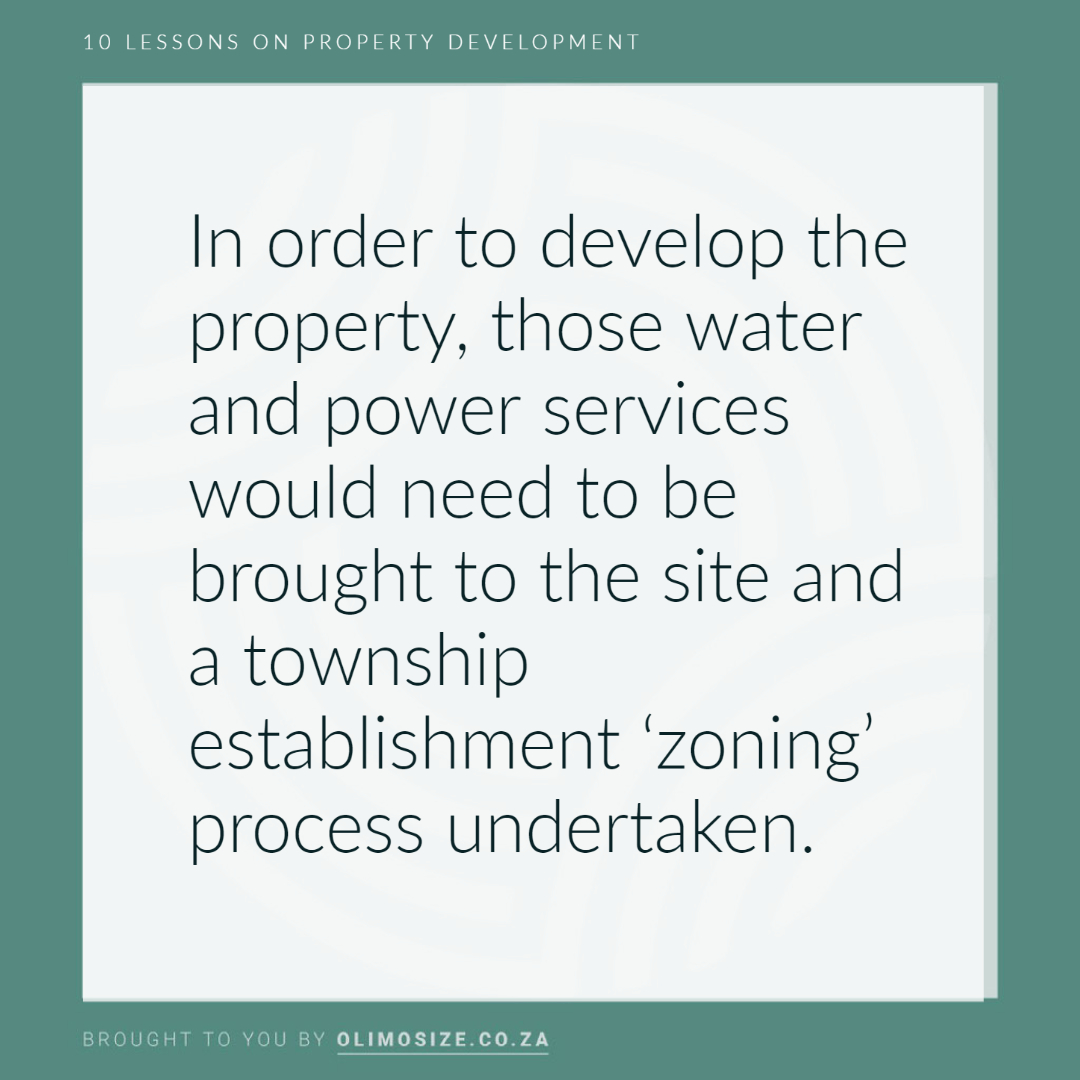
In development terms, this site would be classified as a "Greenfields" site. Which means it has never had any kind of development or building done on the property previously, but what does that mean for the developer? In a nutshell, it means that the developer as part of the complex development, would need to install all of the bulk services; that being potable water, sewer, power, stormwater and road infrastructure onto the site. Or in simpler terms, you have to pay for the connections to have water and electricity on your land. Plus, you would have to undertake a new township establishment application, this is an incredibly expensive and lengthy exercise involving a number of technical / engineering studies to be undertaken.
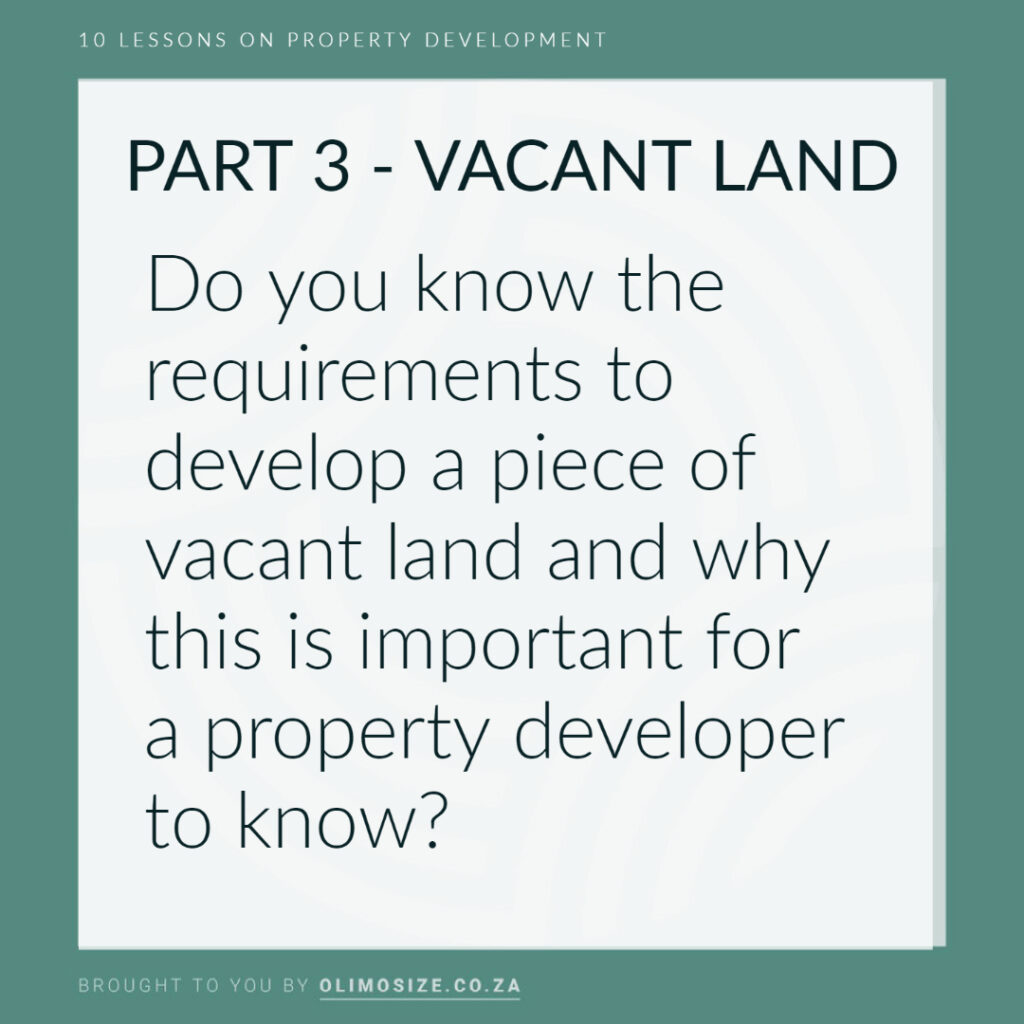
For a project like this one, it is crucial to understand all of the development costs, before making a final decision on whether to proceed with the development. These costs would include a full professional team to establish the township, design and get approvals for the development. This application also includes town planning and building control fees, bulk services contributions payments and connection charges, as well as installing the bulk infrastructure. As I'm sure you know, if the numbers don't work, the project won't work, so with all these extra costs, be sure that what you get out in the end will still be worth it.
A thing I hear often from property entrepreneurs is that they only want to use other people's money to fund their developments, but this is only possible to a point. In order to do a proper due diligence on a property, to understand the feasibility and all of the development costs as discussed, a certain amount of upfront work and studies are required by professionals, such as a QS, planners and engineers, and this does not happen for free. An Investor is not going to be willing to fund the due diligence portion of the project, as there is no return them there, especially if the studies reveal that the project will not work on that site. As the developer, you need to have cash-flow / seed capital to fund the due diligence process.
There you have it, part 3 of the 10 lessons I have learnt about developing property through being a project manager. I hope that you have gained some insight from this article that will help you to make more informed decisions on your next building project.
Be sure and keep an eye out for my next articles on the remaining lessons, and leave a comment with any questions or topics you would most like to hear about next. You can also sign up to our mailing list and receive our articles direct in your inbox so you never have to miss an issue.